
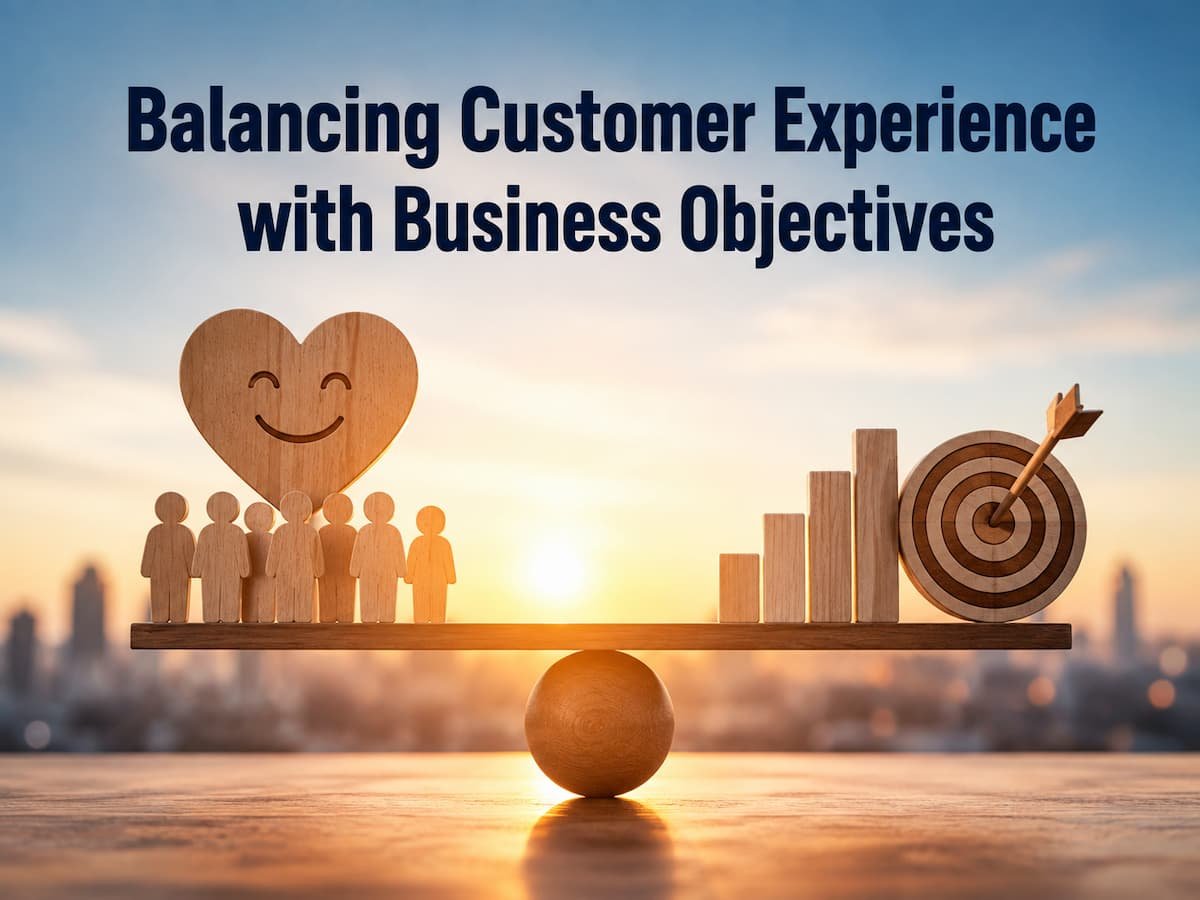
Successful businesses don’t pit customer experience against business goals. Instead, it links them. Well-designed customer experiences can boost revenue, lower costs, boost loyalty, and boost long-term performance. Understanding which enhancements add value for customers and the business is crucial. Not all client requests can be met, and corporate goals should not trump customer needs. Clear priorities, thoughtful decisions, and a deeper understanding of consumer interactions are needed to find the proper balance.
Why Customer Experience and Business Goals Conflict
Short-term goals and consumer expectations don’t always align, making customer experience decisions difficult for many firms. Customers desire ease, flexibility, and value. Resources, costs, employe workload, and sustainability must be considered by businesses. Customers may want 24/7 support team answers. Hiring enough staff to handle every request quickly may not be financially feasible for a business that wants to deliver this level of service.
Not deciding between customers and company goals is difficult. Keeping the business healthy while meeting client needs is difficult. A corporation that ignores customer experience may cut expenses but cause bigger issues. Poor experiences can cause customer loss, bad ratings, and trouble acquiring new customers. A corporation that overlooks commercial realities may offer stunning but unsustainable experiences. Balance comes from knowing consumer happiness and business performance.
Understanding Customer Experience Investment for Business
Because customer experience improvements demand investment, some firms regard them as an expense. It takes work to improve support, communication, goods, and processes. Customer experience can also boost business. Customers are more likely to stay if they understand a product, get appropriate service, and trust a company. Positive customer experiences affect numerous business performance areas:
- Customers may return and buy more.
- Preventable issues may take less time for support personnel.
- Customers may endorse the company.
- Avoidable perplexity may take less time for employees.
- A brand may gain trust over time.
Improving customer experience randomly is wrong. Businesses must determine which enhancements yield results. Simplifying a complex checkout procedure may boost consumer satisfaction and sales. Helping customers with product instructions may reduce support queries. These demonstrate how customer needs and corporate goals align.
Defining Business Objectives Before Improving Customer Experience
One reason companies struggle with customer experience decisions is that they attempt improvements without clearly defining their business objectives. A company cannot decide whether an experience improvement is valuable without knowing what it is trying to achieve. Business objectives provide direction. They help teams understand which improvements should receive priority and which ideas may need to wait. Common business objectives may include:
- Increasing customer retention.
- Improving operational efficiency.
- Reducing unnecessary costs.
- Growing into new markets.
- Improving product adoption.
- Building stronger customer relationships.
Once objectives are clear, businesses can evaluate customer experience improvements more effectively. Instead of asking only, “Will customers like this?” teams can ask, “Will this improve the customer experience while supporting an important business goal?” This approach prevents businesses from making decisions based only on short-term opinions or internal pressure.
Finding the Areas Where Customer Needs and Business Goals Overlap
The strongest customer experience improvements usually happen where customer needs and business objectives meet. These areas create value for both sides. For example, customers often want faster answers to common questions. A business may solve this by creating better self-service resources. Customers receive quicker help, while the company reduces repeated support requests. Another example is improving product usability. Customers benefit because the product becomes easier to use. The business benefits because fewer customers require assistance and more users successfully achieve their goals.
| Customer Need | Business Opportunity |
|---|---|
| Faster support | Reduce repeated support workload through better solutions. |
| Clear information | Improve conversions and reduce confusion. |
| Simpler processes | Increase efficiency and reduce unnecessary steps. |
| Better product guidance | Increase successful product usage. |
Businesses should actively search for these connections. They often provide the highest return because they improve customer experience without creating unnecessary strain on resources.
Avoiding the Mistake of Trying to Please Every Customer
A common customer experience mistake is believing that every customer request must be accepted. Listening to customers is essential, but businesses cannot realistically satisfy every individual preference. Different customers may want different things. One group may prefer more features, while another may prefer a simpler product. Some customers may want lower prices, while others may prioritize premium service.
Trying to satisfy every request can create an unclear business direction. Products become complicated, processes become inefficient, and resources become spread too thin. A better approach is understanding the reason behind customer requests. A customer asking for a specific feature may actually be trying to solve a larger problem. By understanding the underlying need, businesses can find solutions that help more customers. A good customer experience does not mean saying yes to everything. It means making thoughtful decisions that provide meaningful value.
Creating Customer Experiences That Are Sustainable
A customer experience strategy only works when a business can maintain it over time. Many companies create impressive experiences during a specific period but struggle to continue them as customer numbers increase. Sustainable customer experience requires planning, efficient processes, and realistic expectations. For example, a small business may provide highly personalized support because the founder personally responds to every customer. This approach may create excellent experiences initially, but it becomes difficult when the customer base grows. The solution is not removing personalization completely. The solution is creating systems that allow the business to maintain quality at a larger scale.
Sustainable customer experience focuses on improvements that can continue as the business changes. This may involve better training, clearer processes, useful technology, and improved communication between teams. Businesses should regularly ask whether a customer experience improvement can continue without creating unnecessary pressure on employees or resources. A strategy that creates short-term satisfaction but long-term problems is not a successful strategy.
Balancing Personalization with Efficiency
Customers often appreciate personalized experiences because they feel more relevant and helpful. However, personalization can become difficult when businesses grow and serve a larger audience. The solution is not creating a completely different experience for every customer. Instead, businesses should identify where personalization creates the most value. Useful areas for personalization often include:
- Providing recommendations based on customer needs.
- Sharing relevant information at important stages of the journey.
- Remembering previous customer interactions.
- Offering support based on customer experience level.
For example, a new customer may need basic guidance, while an experienced customer may prefer advanced information. Recognizing this difference improves the experience without requiring completely separate systems. Efficiency and personalization can work together when businesses use customer knowledge carefully. The goal is not making every interaction unique. The goal is making important interactions more useful.
Managing Customer Expectations Through Clear Communication
Many customer experience problems do not happen because a business fails to deliver. They happen because customers expected something different from what the business provided. Clear communication helps prevent these gaps. Customers need accurate information about products, services, timelines, pricing, and policies before making decisions. A business that communicates honestly may sometimes appear less attractive in the short term, but it often builds stronger trust. Overpromising may create more sales initially, but disappointment afterward can damage relationships. Businesses can improve expectation management by:
- Explaining what customers can realistically expect.
- Avoiding unclear promises in marketing messages.
- Providing helpful information before customers make decisions.
- Updating customers when situations change.
Good communication reduces frustration because customers understand what will happen and why.
Using Customer Feedback Without Losing Business Direction
Customer feedback is essential for improving experiences, but businesses need a balanced approach when using it. Feedback should guide decisions, not completely control them. A business that follows every customer suggestion may lose focus. However, a business that ignores feedback may miss important problems and opportunities. The best approach is evaluating feedback through multiple questions:
- Does this solve a problem experienced by many customers?
- Does this support the company’s long-term goals?
- Can this improvement be delivered effectively?
- Will this create value beyond a small group of customers?
For example, customers may request additional features for a product. Instead of immediately adding every feature, the business should understand the underlying customer need. The solution may be improving usability rather than adding more complexity. Customer feedback is most valuable when combined with business strategy.
Aligning Employees Around Customer and Business Goals
Customer experience is influenced by many people inside a company. A marketing team creates expectations, a sales team explains value, employees deliver products or services, and support teams handle questions. If these teams work toward different priorities, customers experience inconsistency. A company may promote convenience while internal processes make interactions difficult. It may promise quick responses while employees lack the resources to provide them. Alignment helps create a more consistent experience. Employees should understand both sides of the equation: why customer needs matter and why business objectives are necessary. Useful practices include:
- Sharing customer insights across departments.
- Creating clear service standards.
- Helping employees understand business priorities.
- Recognizing improvements that benefit both customers and the company.
When employees understand the purpose behind decisions, they can make better choices during everyday customer interactions.
Making Decisions When Customer Expectations Conflict
Businesses will sometimes face situations where they cannot provide exactly what customers want. Resources may be limited, costs may increase, or certain requests may not align with the company’s direction. These situations require careful decision-making rather than simply choosing the cheapest option or automatically accepting customer demands. A balanced decision process considers:
| Question | Purpose |
|---|---|
| How many customers are affected? | Understand the scale of the issue. |
| How important is this experience to customers? | Identify customer impact. |
| What resources are required? | Evaluate feasibility. |
| Does this support long-term goals? | Maintain business direction. |
Sometimes the best solution is not giving customers exactly what they requested. It may be finding another way to solve the underlying problem while protecting business sustainability.
Building a Long-Term Customer Experience Strategy
Balancing customer experience with business objectives is not a one-time decision. It is an ongoing process that requires regular evaluation and adjustment. Customer expectations change, markets evolve, and businesses develop new priorities. A strategy that works today may need improvement in the future. A strong long-term approach includes:
- Regularly reviewing customer feedback.
- Monitoring customer behavior and satisfaction.
- Improving processes that create unnecessary difficulty.
- Investing in areas that create value for both sides.
- Adjusting strategies as the business grows.
The purpose is not creating the most expensive customer experience or the most convenient process possible. It is creating an experience that customers value and the business can successfully maintain.
Conclusion
Customer experience and commercial objectives do not have to be mutually exclusive. Used properly, they have the same purpose: to create a firm that clients trust and that can continue to expand. The finest customer strategies realize that businesses need healthy operations and customers demand genuine value. Neglecting either side generates complications. If a business focuses just on efficiency, it may lose consumer trust. If a business focuses only on customer needs, it may not be viable.
The key to balance is understanding clients, setting clear objectives, and making careful judgments. The best changes are those that make customers happier and help the firm run better. When customer experience is embedded into business strategy and not introduced as an afterthought, long-term success is created. Companies that master this balance generate deeper relationships, enhance loyalty, and provide the groundwork for long-term success.
FAQs
1. Does it always cost more to improve customer experience?
Not necessarily. Certain customer experience enhancements cut costs by avoiding issues, increasing efficiency, and decreasing the need for recurring service. The aim is to find changes that add value, not just spend more.
2. How do companies pick what customer enhancements to focus on?
Improvements should be prioritized based on consumer effect, corporate goals, resources available, and long-term value. Most improvements are helpful because they address prevalent issues and promote significant goals.
3. Is there such a thing as being excessively client obsessed?
Yes. Customer happiness is important. Sustainability is important. In the end, an unsustainable strategy can lead to a worse customer experience.
4. What is the function of employee training in the customer experience?
Employees directly impact the way customers are treated. “Training allows the teams to understand customer needs, business priorities, and how to respond to situations consistently.
5. How often should companies review their customer experience strategy?
Companies should revisit their strategy often, particularly when there have been big changes in the business, customer behavior, product releases, or a marked change in feedback.