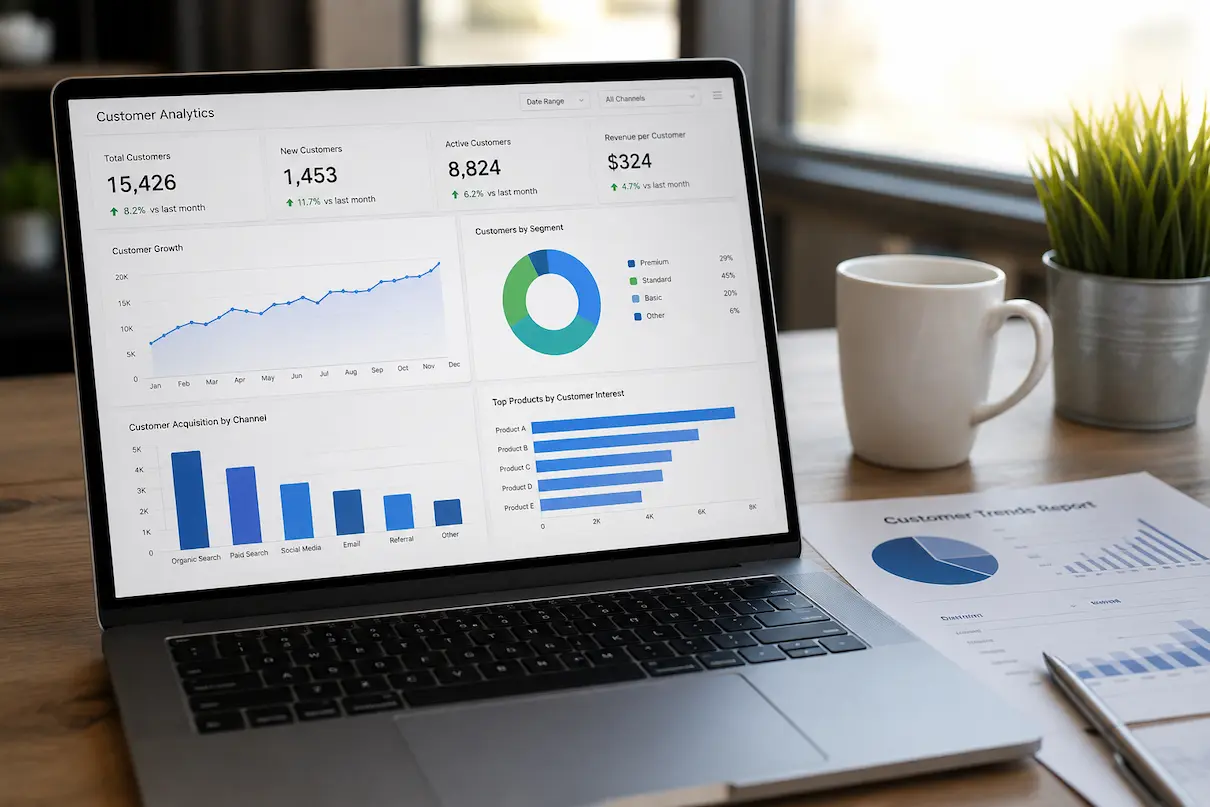
A rapidly growing retail company was satisfied with its performance at the end of its monthly review. Revenue remained steady, the company met its new customer acquisition targets, and operational reports showed no major issues. The marketing department was pleased with campaign effectiveness, and customer service managers reported acceptable response times. Had management focused solely on these figures, they would have assumed the company was steadily moving in the right direction with no immediate risks.
However, a few weeks later, a more detailed analysis revealed issues that routine reports had missed. Existing customers were taking longer to make repeat purchases, mobile users were comparing products before placing orders, and people were paying more attention to educational content and less to promotional emails. While these changes might not seem significant in isolation, collectively they signaled a shift in customer needs. Had the company relied solely on monthly reports, these subtle changes might not have been noticed until they began to impact sales and customer loyalty.
This is one reason why customer data is so crucial to business operations today. Its applications extend far beyond creating charts or analyzing past performance. Effective analysis can help companies uncover patterns in human behavior and the underlying reasons behind them. It can also help identify opportunities before performance declines. Companies that understand customer trends can adapt their products, services, and customer experiences more easily than competitors, who often wait for performance to drop before making changes.
Looking Beyond Individual Reports
Business reports are generally intended to summarize what has been achieved. They display sales figures, revenue, the number of resolved support tickets, or the performance of a marketing campaign over a specific period. These reports remain useful, as they provide managers with accurate insight into business operations and help them track progress toward business goals. However, they typically do not indicate whether customer behavior is beginning to change.
Customer trend analysis examines the same data differently. Instead of focusing on a single reporting period, it looks at changes in customer behavior over weeks, months, or even years. A drop in interaction within a single month might simply reflect seasonal buying habits or short-term market conditions. However, if interaction volume gradually declines over multiple reporting periods, it usually signals a deeper shift in customer norms. Distinguishing between short-term fluctuations and genuine behavioral changes helps companies avoid unnecessary reactions and ensures significant shifts receive the attention they deserve.
Companies that closely monitor long-term customer behavior are generally better equipped to address future issues, as they can recognize patterns before problems harm their interests. They do not wait for sales to drop or customer retention to decline before taking action; instead, they look for early warning signs so they can improve the situation while customer relationships remain strong.
Reports Explain Performance, Trends Explain Direction
A monthly report may show that customer satisfaction remained at 89 percent throughout the previous quarter. On the surface, that appears encouraging because the metric has remained relatively stable. Yet the same report may overlook subtle behavioral changes such as declining product usage, fewer repeat visits, or reduced participation in customer events. Individually these indicators seem unrelated, but together they may suggest that customer engagement is slowly weakening despite stable satisfaction scores.
Understanding direction is often more valuable than understanding current performance alone. Trends reveal whether customer relationships are becoming stronger, remaining stable, or gradually moving toward potential risk. By focusing on direction rather than isolated values, organizations gain a clearer picture of where customer behavior is likely to lead in the future.
Customer Behavior Evolves Through Small Changes
Customers rarely transform their buying habits overnight. More often, meaningful behavioral changes develop gradually through dozens of small decisions that individually appear routine. Someone may begin researching products more carefully before purchasing, interact less frequently with educational resources, or delay replacing existing products for a few additional weeks. None of these actions automatically indicates dissatisfaction, yet together they often reveal changing priorities that deserve attention.
Because these changes happen gradually, they are easy to overlook when businesses concentrate exclusively on short-term performance reports. Analytics becomes valuable because it connects these individual observations into recognizable patterns. Instead of seeing unrelated customer actions, organizations begin understanding how behaviors evolve throughout the customer journey and what those developments may indicate about future business performance.
Early Signals Usually Appear Before Financial Results
Financial reports often reflect decisions customers have already made. Behavioral analytics frequently reveals decisions customers are still considering. Declining product usage, reduced engagement with customer communities, or increasing time spent researching alternatives may all appear before revenue begins to change. Organizations that recognize these signals early gain valuable opportunities to improve customer experiences while relationships remain healthy.
This proactive approach allows businesses to investigate underlying causes rather than reacting after measurable financial impact has already occurred. In many cases, relatively small operational improvements introduced at the right time prevent larger customer retention challenges from developing months later.
Every Customer Journey Leaves Patterns
No two customers follow exactly the same path, but groups of customers often display remarkably similar behavioral patterns. New customers may require additional educational resources before becoming regular buyers, while long-term customers often expand into additional products after reaching specific milestones. Customers preparing to leave may reduce engagement gradually rather than ending the relationship immediately.
Recognizing these recurring patterns helps organizations improve forecasting while also supporting better customer experiences. Instead of treating every interaction as an isolated event, businesses begin understanding how different stages of the customer journey naturally influence future behavior.
Looking at Customer Trends From Different Angles
Meaningful analytics rarely depends on one measurement alone. Understanding customer trends requires examining several aspects of the relationship because purchasing behavior, engagement, and service experiences often influence one another. Looking at these dimensions together creates a far more complete picture than relying on financial reports alone.
Purchasing Patterns Reveal Changing Priorities
Revenue remains one of the most important business indicators, but purchasing behavior often provides deeper insight than sales totals by themselves. Customers may continue spending similar amounts while changing the products they buy, extending the time between purchases, or concentrating spending during promotional periods. These shifts may indicate evolving needs, changing budgets, or new market influences long before they affect overall revenue.
By studying purchasing trends over longer periods, organizations gain a clearer understanding of how customer priorities are changing. This knowledge supports better inventory planning, pricing strategies, product development, and promotional decisions because leaders understand not only what customers are buying but also how their buying habits continue to evolve.
Engagement Often Changes Before Spending
Customer engagement includes every meaningful interaction beyond completed purchases. Website activity, product usage, educational content, webinar participation, email engagement, and mobile application behavior all contribute valuable insight into the strength of customer relationships. These interactions often begin changing weeks or months before customers adjust their purchasing behavior.
Monitoring engagement alongside financial performance provides valuable context that isolated sales figures cannot offer. Customers who remain actively involved with a business generally display stronger long-term loyalty than those whose interactions steadily decline. Recognizing these engagement trends enables organizations to strengthen relationships before customer commitment begins to weaken.
Service Interactions Reveal Emerging Customer Needs
Customer support is often viewed as a function that resolves problems after they occur, but it also provides one of the richest sources of customer intelligence. Every support request, product question, billing inquiry, or feature suggestion reflects how customers experience a business in real situations. When these interactions are analyzed over time, they frequently reveal trends that traditional sales reports cannot capture.
For example, an increase in onboarding-related questions may indicate that new customers need clearer guidance rather than additional product features. Similarly, repeated inquiries about a specific service could suggest that existing documentation is difficult to understand or that customer expectations have changed. By recognizing these recurring themes early, organizations can improve processes before minor frustrations grow into larger customer satisfaction or retention issues.
Trends Become Stronger When Multiple Signals Are Combined
Individual metrics rarely provide enough evidence to support important business decisions. A slight decline in product usage might not be concerning on its own, just as an increase in support requests may simply reflect seasonal demand. However, when several related indicators begin changing at the same time, they often point toward a broader shift in customer behavior that deserves attention.
Imagine a situation where repeat purchases become less frequent, website engagement declines, and customers begin contacting support with more product comparison questions. Looking at each trend separately may not reveal much, but examining them together suggests that customers are becoming more cautious before making buying decisions. This broader perspective enables businesses to investigate the reasons behind the change instead of reacting to individual metrics without understanding the full picture.
Turning Customer Analytics Into Better Business Decisions
Collecting customer information has little value unless it influences the way decisions are made. Organizations with mature analytical capabilities do not review customer trends simply to produce reports for management meetings. Instead, they use those findings to improve customer experiences, refine operational processes, identify growth opportunities, and reduce potential risks before they begin affecting overall business performance.
This shift changes the types of discussions that take place inside the organization. Rather than asking why revenue increased or decreased during the previous month, leaders begin exploring which customer behaviors changed first and what those changes might indicate about future performance. Conversations become more focused on understanding customer needs instead of simply explaining historical business results.
Analytics Helps Every Department Make Better Decisions
Customer trend analysis benefits far more than marketing or sales teams. Product managers use behavioral insights to identify which features customers adopt naturally and which require additional improvements. Customer service leaders recognize recurring issues that may justify new training materials or process adjustments. Marketing specialists refine campaigns by understanding how customer interests evolve, while executives gain a broader understanding of how customer relationships contribute to long-term business stability.
Because every department views customers from a different perspective, combining these insights creates a more complete understanding of the customer journey. Decisions become better coordinated, priorities become clearer, and improvements introduced by one team often strengthen results across several areas of the business.
Not Every Trend Requires Immediate Action
One of the most common mistakes in customer analytics is assuming that every noticeable change demands an immediate response. Customer behavior is influenced by numerous external factors, including seasonal demand, economic conditions, industry developments, and promotional activities. Temporary fluctuations are a normal part of business and should not automatically trigger major strategic changes.
Successful organizations distinguish between short-term variation and sustained behavioral movement. They observe whether a trend continues across multiple reporting periods, compare findings with historical performance, and evaluate whether supporting indicators point toward the same conclusion. This disciplined approach reduces unnecessary reactions while ensuring genuine long-term developments receive appropriate attention.
Questions That Help Validate Customer Trends
Before acting on any customer trend, analysts often consider several practical questions that strengthen confidence in their findings:
- Has this pattern appeared consistently across multiple reporting periods?
- Are several customer metrics pointing toward the same conclusion?
- Could seasonal activity or recent campaigns explain the change?
- Have similar trends appeared among specific customer segments?
- Does operational feedback support what the analytics suggest?
Answering these questions helps organizations separate meaningful trends from temporary anomalies, leading to more informed business decisions.
Interpreting Customer Trends More Effectively
The table below illustrates how similar customer behaviors can point toward different business opportunities depending on the broader context in which they occur.
| Customer Trend | Possible Interpretation | Potential Business Response |
|---|---|---|
| Repeat purchases become less frequent | Customer priorities may be changing | Review purchasing patterns and customer feedback |
| Product usage gradually declines | Customers may not be realizing full value | Improve onboarding or customer education |
| Support inquiries increase after product updates | Customers may require additional guidance | Expand documentation and training resources |
| Higher engagement with educational content | Customers are exploring advanced capabilities | Develop deeper learning resources and product content |
| Increased browsing before purchases | Buying decisions are becoming more deliberate | Improve product comparisons and decision-support materials |
Rather than treating these observations as automatic conclusions, organizations should view them as starting points for further investigation. The combination of customer behavior and business context ultimately determines the most appropriate response.
Frequently Asked Questions
Why is analyzing customer trends more useful than reading monthly reports?
Monthly reports show recent business performance, whereas trend analysis reveals how customer behavior changes over time. A broader perspective helps companies identify new opportunities and potential threats before relying solely on financial data.
How much historical data is needed to identify significant trends?
Customer behavior varies by business model and industry, so there is no standard rule. Many companies gain more valuable insights by analyzing data spanning several months—or even multiple business cycles—rather than focusing on just a single reporting period.
Should all customer groups be analyzed simultaneously?
Not necessarily. Different customer groups typically have distinct purchasing habits, expectations, and ways of interacting with the company. In most cases, segmentation analysis yields more accurate results because it reveals the behavioral patterns of each group within its specific context.
Can business analytics help companies make more accurate predictions?
Yes. While analytics cannot predict the future with 100% certainty, identifying recurring behavioral patterns allows companies to make more accurate forecasts and better prepare for likely changes.
What is the most challenging aspect of understanding customer trends?
The biggest challenge is confusing short-term fluctuations with long-term shifts. It is crucial to remain patient, evaluate the past, and consider the current business landscape before making major decisions.
How often should customer trends be evaluated?
Operational trends may require weekly evaluation, whereas strategic, macro-level patterns are typically assessed on a monthly or quarterly basis. The frequency of evaluation should align with the pace at which customer behavior within the company changes.